Everything You Need To Know About The Picture Framing Process
Everything you need to know about the picture framing process
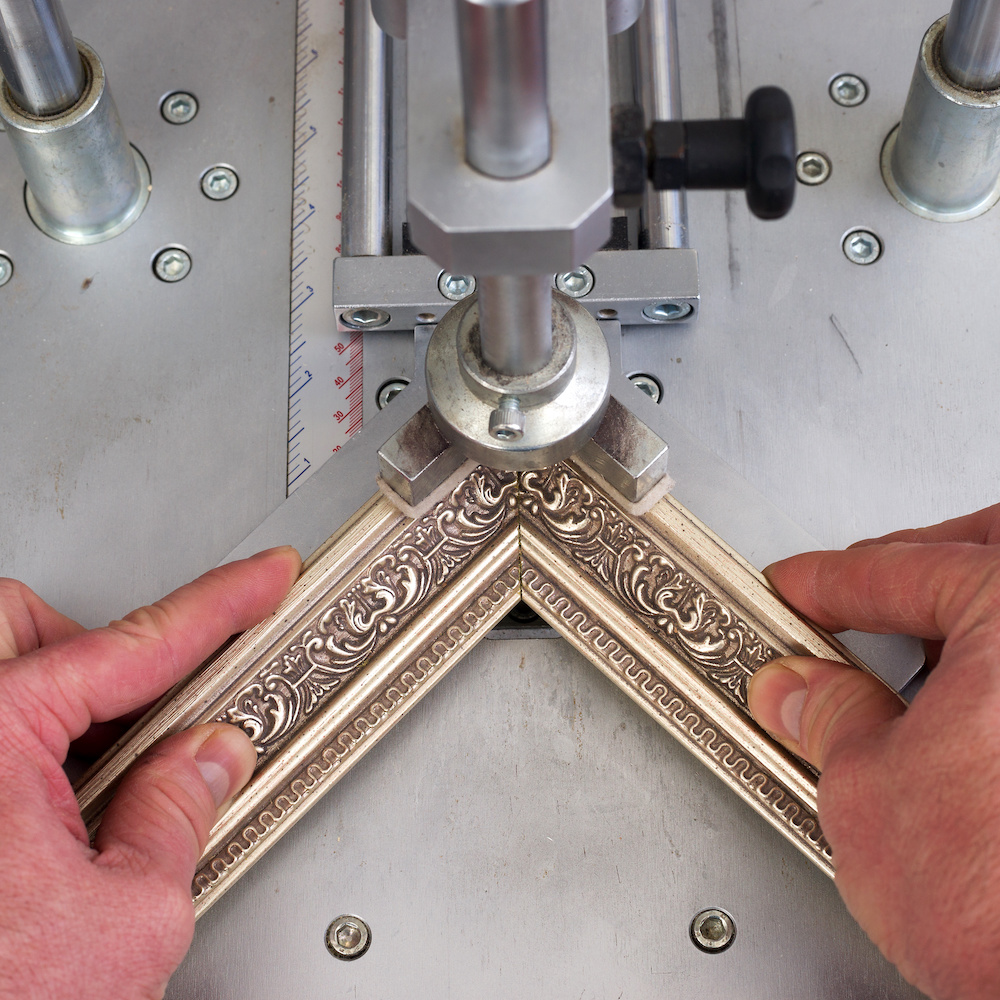
Picture framing and matting can be a quick and easy process, but it can also get quite complicated too. The type of picture frames uk you choose and the outcome you want to achieve, will drive the number of steps you will need to follow in order to obtain the best results. The following article aims to help to make you more familiar with the ins and outs of picture framing.
An introduction to Picture Framing and Matting
The world of picture framing has changed dramatically over the past few years. In the past, it was the domain of professionals who would charge large amounts for costly, archival frames and other high-end framing techniques. This led to something of a revolt amongst crafts-people who took it upon themselves to frame their own prints using store-bought frames and mat-cutters, which led to the professional framers having a rethink. Nowadays, picture framing is accessible to anyone who wants to do it – thanks to companies like ourselves offering made to measure picture frames online.
Our service allows you to frame your own pictures in a professional looking way, allowing you to display your favourite memories so they become a part of your daily life. The purpose of picture framing is two fold:
- Protection
- Presentation
The mechanics of framing are therefore important, but so are the aesthetics as well. The style, colour, and proportion of the frame are all things that need to be taken into account, as well as the matting.
Matting is the name given to the border which surrounds the piece of art of photograph. It is usually made from a type of board which is specifically manufactured for this purpose, and is known as matboard. The matboard is cut to the size of the frame, and then an opening is cut into the matboard which serves as a window for displaying the art.
Mats are an important part of the framing process as they help with the visual presentation of the piece. The mat you choose can help to highlight a colour in your room décor or the artwork itself, it can accent a particular shape in the art piece, or it can help to increase the size of the artwork to make it a dramatic display.
From a practical point of view, a mat also helps to provide support for the artwork, as it protects and hides from view the hinges that are holding the art in place. It also allows for air circulation between the art and the glazing material (either glass or plexiglass) so that no moisture is trapped in between.
Frame Types
We sell a wide range of picture frames in a variety of finishes, materials, shapes and styles – with the style and strength being the most important thing for you to take into account when you are choosing a frame. The frame you choose should be strong enough to bear the weight of everything you wish it to hold, especially if it is a heavy piece of artwork and you want it framed behind glass.
Size is also an important thing to take into account. There are various measurements you need to be aware of when it comes to picture framing and these are:
- Rabbet size – the lip and inner sides of the frame which contain the framing material. You should make sure that the rabbet size is big enough to hold all of the layers you wish to include, e.g., artwork, matting board, backing board, and glass.
- Viewing size – the visible area of the artwork you will be able to see. The very edges of your piece will be hidden from view (unless you purchase a clip frame)
- Outside edge – the outside frame size – important to know if you are wanting your piece to slot into an existing gallery wall display
Ready-made picture frames
Frames tend to come in standard sizes and can be made from a wide variety of materials, such as aluminium, plastic or wood. They are sometimes sold empty, or can be purchased with matting and glass included.
The standard sizes for ready-made picture frames that we offer are as follows:
- 3 x 5 inch
- 4 x 6 inch
- 5 by 3.5 inch
- 5 by 7 inch
- 6 by 8 inch
- 8 by 10 inch
- 10 by 12 inch
- 11 by 14 inch
- 12 by 16 inch
- 16 by 20 inch
- 20 by 24 inch
- 20 by 30 inch
- 24 by 36 inch (MAXI)
- 27 by 40 inch
Glass or Plexiglass
The other important question when it comes to picture frames, is should you choose glass or plexiglass for your frame?
Well, when you think of plexiglass (or acrylic as it is more commonly known) the first thing that should come to mind it its durability as compared to glass acrylic is practically unbreakable. If you are wanting to frame a piece that may get moved around a lot, then acrylic has to be the best choice.
Having said that, although it is less breakable than glass, acrylic is actually more easily damaged as it tends to get scratched. Even rubbing the surface of a plexiglass frame with a paper towel to remove dust could see it becoming scratched. For this reason, it is always best to use a soft cloth to clean it with, as well as acrylic cleaner (not glass).
The funny thing about cleaning both glass and acrylic, is that acrylic frames tend to arrive with you in a cleaner state than glass. This is because acrylic tends to come with a protective coating attached which is peeled away once the art is in situ. Glass, on the other hand, is usually dirty when it is purchased and needs to be cleaned vigorously and repeatedly to get it to a nice state.
Something else that may surprise you is that if you clean your picture frames a lot it can cause static electricity to build up inside the frame, which will cause dust and lint to stick to the inside of the glass. Acrylic tends to suffer from this worse than glass, actually, but you can get around this by using an anti-static brush on it as soon as you remove the protective film.
One of the biggest benefits of plexiglass, as compared to glass, is that it is much lighter. If you are framing a larger piece, say in a frame size 24-inch x 36 inch, the glass can become dangerously heavy which can cause the frame to bow under the weight. Glass can also be awkward to handle at this size, as it can easily flex and snap.
So, there it is – everything you need to know about the picture framing process. If it all sounds very complicated then don’t worry. The experienced team here at Frames UK are here to help so please contact us on 0208 015 1060 between 9am and 5.40pm Monday to Friday, or alternatively you can drop us an email to [email protected]